
How Banks help Big Oil raise money through the bond market


Bonds are like IOUs that companies sell to investors—with the help of banks (i.e. underwriters). When investors buy bonds, they lend money to the issuing company for a period of time, over which the issuer makes regular interest payments. At the end of that period, the bond “matures” and the issuer repays the full value of the bond to the bondholder.
To sell bonds, fossil fuel companies need banks to:
Over half of fossil fuel financing comes from bond issuances – so this is a crucial funding tap to big polluters. It’s also an appealing source of capital for oil and gas companies: compared to loans, bonds are less scrutinized and cheaper, and they don’t require companies to share control with investors the way equity does.

Amount: $1 billion USD
Date Issued: July 10, 2025
Banks involved: Citigroup, Wells Fargo, Bank of America, JPMorgan, Goldman Sachs, Morgan Stanley, Royal Bank of Canada, Banco Santander, and others
Cheniere is the largest U.S. exporter of Liquefied “Natural” Gas (LNG). Its dirty projects include Corpus Christi LNG and Sabine Pass LNG, which release enough toxic air pollution combined to cause up to 36 premature deaths per year and $594 million in annual health costs, according to a report from Greenpeace and Sierra Club. Cheniere was also reportedly seeking $140 million in tax credits for fueling its LNG tankers with LNG, misleadingly calling it an “alternative fuel.”


Amount: $2 billion USD total (2 bonds)
Date Issued: July 10, 2025
Banks involved: Citigroup, Santander, Deutsche Bank, UBS, BBVA, and Banco Itaù
PetroBras is the state oil company of Brazil and a major operator in the Brazilian Amazon and in offshore oil developments, including controversial plans to drill at the Mouth of the Amazon River. The environmental licensing process for this oil block has been mired in technical and legal disputes since 2020. The process has also been advancing without proper community consultation nor the consent the region’s Indigenous Peoples and Traditional Communities. Experts warn that opening this block could set a dangerous precedent for new drilling licenses in nearby areas.
Amount: $3 billion USD total (2 bonds)
Date Issued: October 3, 2024
Banks involved: Citigroup, Goldman Sachs, HSBC, JPMorgan, and others
Saudi Aramco, the state-owned national oil company of Saudi Arabia, is the largest upstream oil and gas developer in the world. The company has massive plans to expand oil and gas production, despite clear warnings from international experts that any additional fossil fuel development will jeopardize global climate goals. In 2023, Saudi Aramco—along with its major financiers, including Citi—was warned by the United Nations that it may be violating human rights due to its role in worsening climate change.
Explore more dirty deals at Reclaim Finance’s Toxic Bond Tracker.

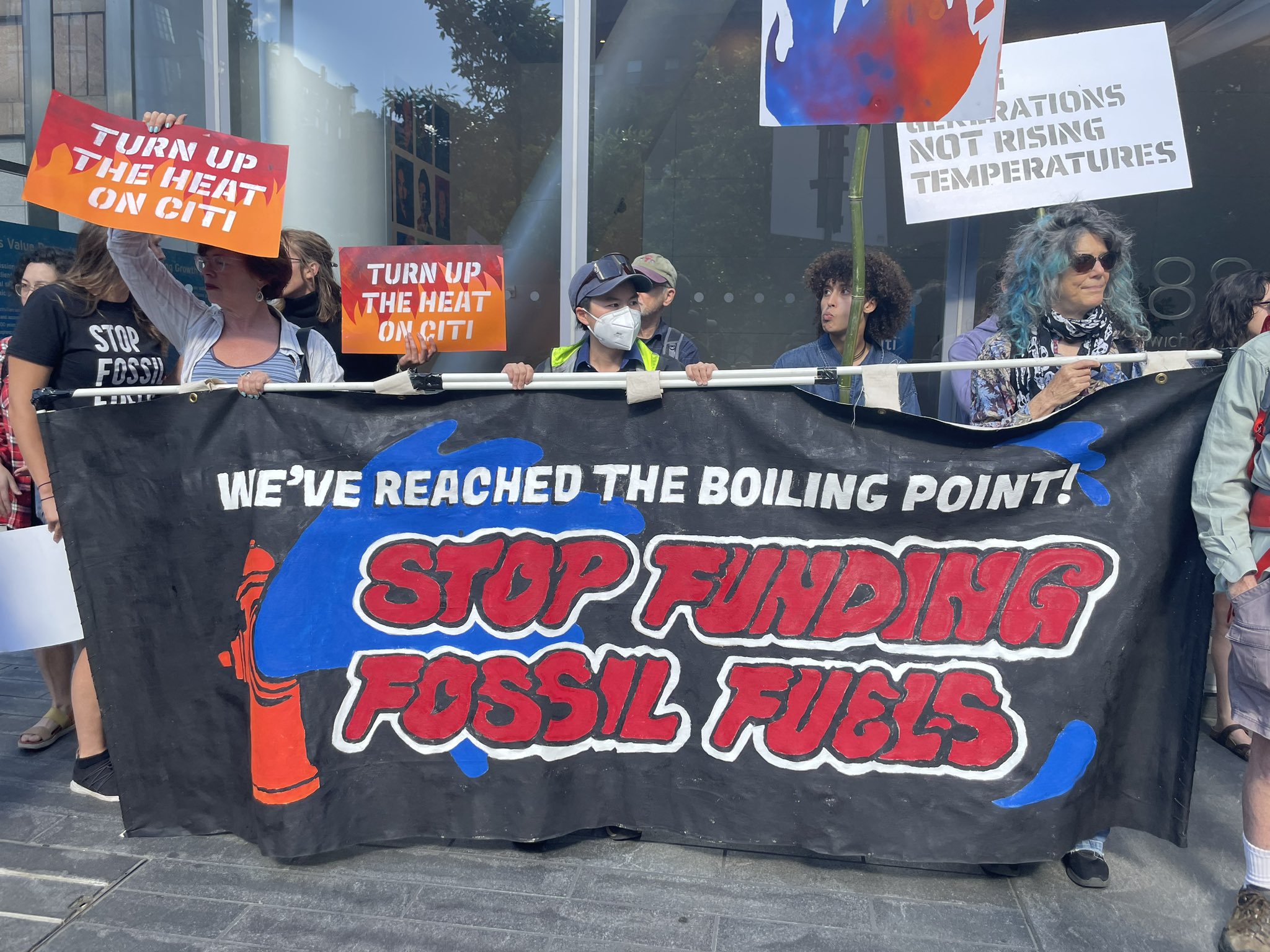
This a testimony submitted by Hannah Saggau, Stand.earth Senior Climate Finance Campaigner, to the New York City Banking Commission to vote against major fossil fuel financing banks as Designated Banks.

Banks and shareholders are falling in line with the Trump regime on climate and human rights, but you can hold them accountable with us.
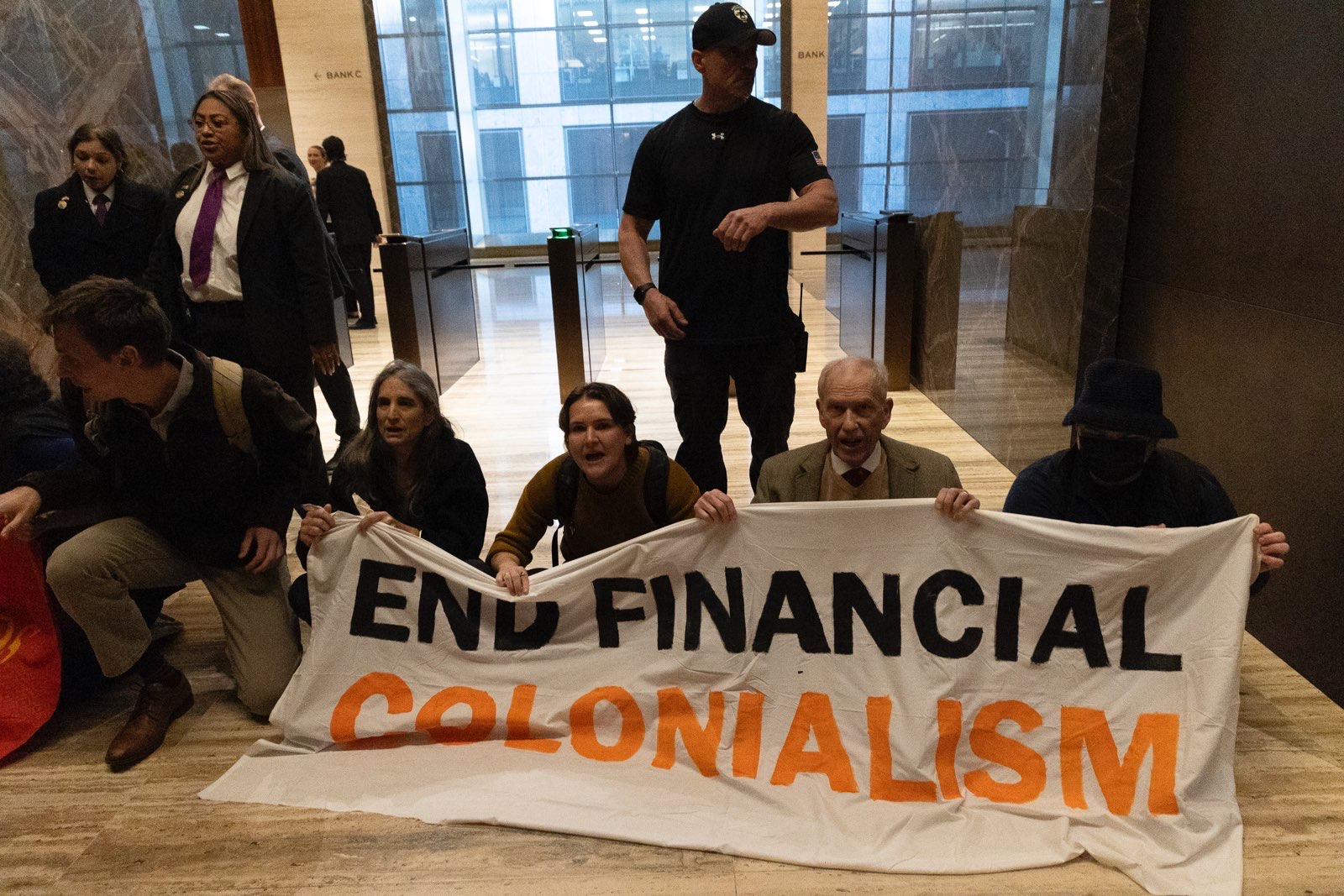
Declining support for the proposals signals that investors are falling in line with the Trump regime’s attacks on human rights and climate

Managed by Stand.earth & built by 89Up