
Banks and shareholders are falling in line with the Trump regime on climate and human rights, but you can hold them accountable with us.

Amid a fascist takeover and attacks on climate and racial justice in the U.S., this week was an important moment of accountability for Big Banks’ role in funding Big Oil’s climate crisis and environmental racism. On April 29, Citi and Wells Fargo held their respective annual meetings for shareholders, where investors voted on proposals around the banks’ Indigenous Rights and climate records.
The results were a maddening sign of the times:
As corporations rush to scrub their environmental and social pledges and bend the knee to the Trump regime, Wells Fargo is setting itself apart as the most cowardly bank on Wall Street. In February, Wells Fargo abandoned its most important climate goals, and it’s now scheming to privatize the U.S. Postal Service. This is the same Wells Fargo now paying up billions for contributing to the 2008 financial crisis and opening up millions of fake accounts in 2016. Now, Wells Fargo is caving to Trump and his authoritarian playbook: increasing corporate power, furthering climate destruction, dismantling public institutions—all under the guise of “efficiency.”
At their shareholder meetings, both Wells Fargo and Citi executives faced tough questions about their controversial Indigenous Peoples’ Rights records, climate policies, fossil fuel financing, and financing environmental racism in the U.S. Gulf South:
Wall Street and fossil fuel elites are conspiring to lock you into higher energy bills and worsening climate disasters so that they can profit. We’ve been pressuring banks for years to shift their support from fossil fuels to climate solutions—and we’ve had important wins along the way—but now, the Trump regime and Wall Street executives are conspiring to undo our progress.
Here’s the backstory: Oil and gas companies need money to build out new polluting operations (even though they should be transitioning to renewables!). They often turn to big banks like Wells Fargo, JPMorgan Chase, Citi, and Bank of America, who lend out billions to fossil fuel companies directly, as well as help them raise money by selling toxic debt to investors on the bond market (like an IOU).
Since the Paris Climate Agreement was signed in 2016, committing almost 200 countries to limit global warming to 1.5°C, banks have enabled $6.9 trillion in financing to the fossil fuel industry—directly undermining global climate goals.
A big chunk of this is banks’ funding for fossil gas (also called liquefied natural gas, or LNG), from new polluting gas export terminals in the U.S. Gulf South to new LNG-powered ships. Just six banks are responsible for 80% of all US financing for LNG expansion, and Citi and Wells Fargo are two of them. Citi is the largest global funder for companies expanding LNG since 2016, while Wells Fargo nearly doubled its LNG expansion financing between 2021 and 2023. But most of this gas is for export, not domestic use, and will only push up your energy bill, slow clean energy development, and pollute local communities where facilities are built—all so that an already-wealthy elite can continue to profit.
Banks are also egregiously underfinancing renewable energy. Wells Fargo is one of the worst, pouring half as much funding into clean energy as fossil fuels. According to international energy modelers, investment in clean energy should be six times as much as fossil fuels. Wells Fargo’s leadership even encouraged shareholders to vote against a shareholder proposal that just asked for the bank to release its ratio of renewables to fossil fuel financing.
Even though major U.S. banks pledged to reach net zero emissions by 2050, this hasn’t translated to ending their massive funding for new fossil fuel projects. In 2023 alone, Citi and Wells Fargo poured a combined $25 billion into coal, oil and gas companies that were expanding fossil fuels. That number should be zero, according to international energy modelers.
Now, with the Trump regime in power, Wall Street executives are lining up to kiss the ring by rapidly dropping their climate goals along with their Diversity, Equity, and Inclusion (DEI) commitments. All the big Wall Street banks have fled major climate alliances and backtracked on their climate goals since Trump was elected. Wells Fargo’s move to drop its 2030 and 2050 financed emissions reduction targets is the most dangerous and cowardly yet. Banks’ biggest impact on the climate is through their fossil fuel financing, which is calculated via their “financed emissions”—not their operational footprint, which is minimal.
Wall Street is showing their hand: they only professed to care about racial and climate justice as long as the political winds were favorable, and as soon as power shifts hands, they will abandon any pretense of advancing equity and justice.
Wells Fargo’s departure from the Net Zero Banking Alliance isn’t just a policy move. It risks signaling to other banks that they, too, can back out of global climate commitments without consequence, and succumb to Trump’s demands to ignore the climate crisis.
This bank’s proud stagecoach logo isn’t just branding—it represents their legacy of land grabs and resource extraction. But we won’t let them continue to profit off of climate destruction and privatization.
The people have stopped corporate greed before—and we’re going to do it again. This is a winnable fight. But only if we act now.

How Banks help Big Oil raise money through the bond market
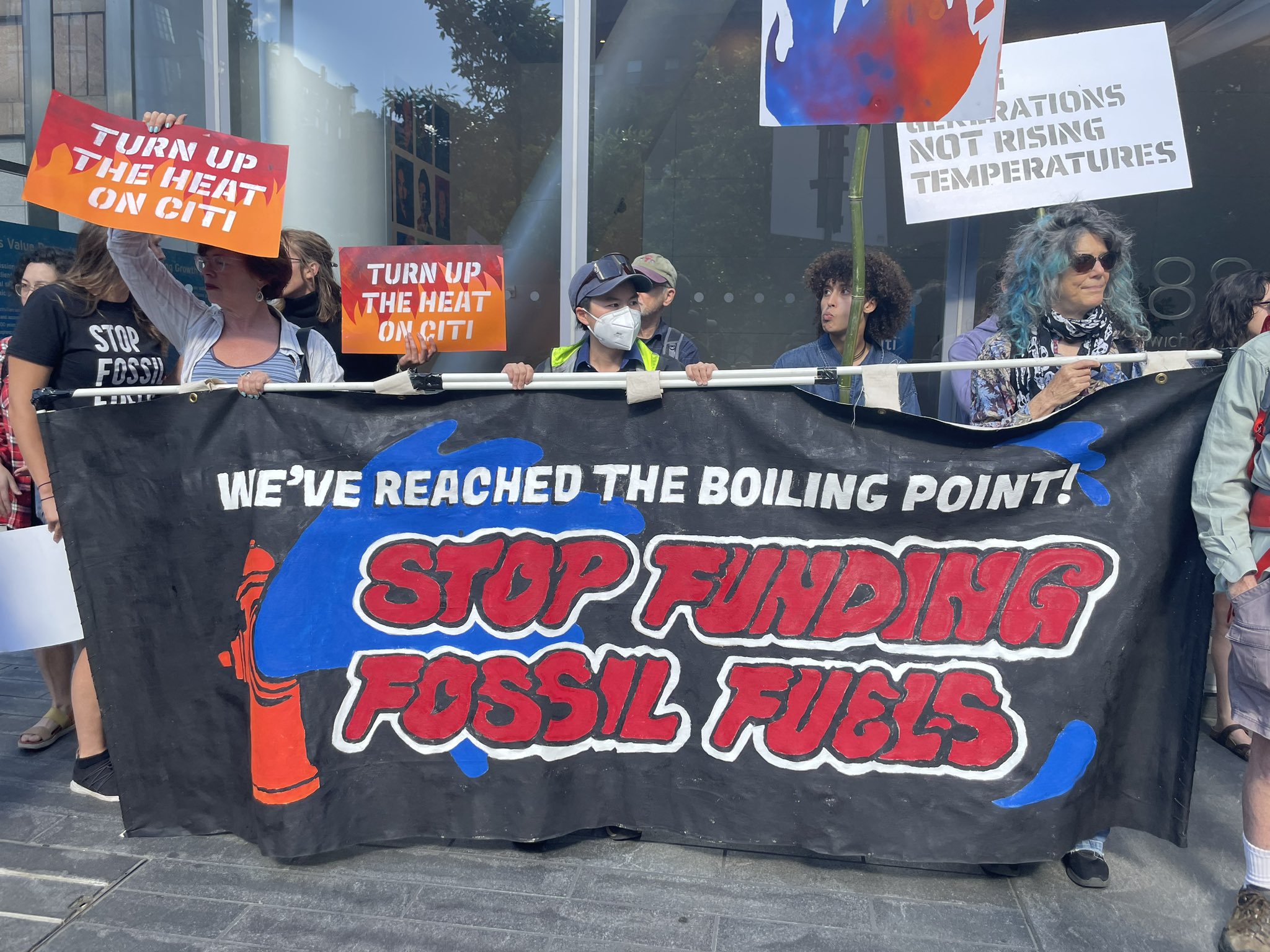
This a testimony submitted by Hannah Saggau, Stand.earth Senior Climate Finance Campaigner, to the New York City Banking Commission to vote against major fossil fuel financing banks as Designated Banks.
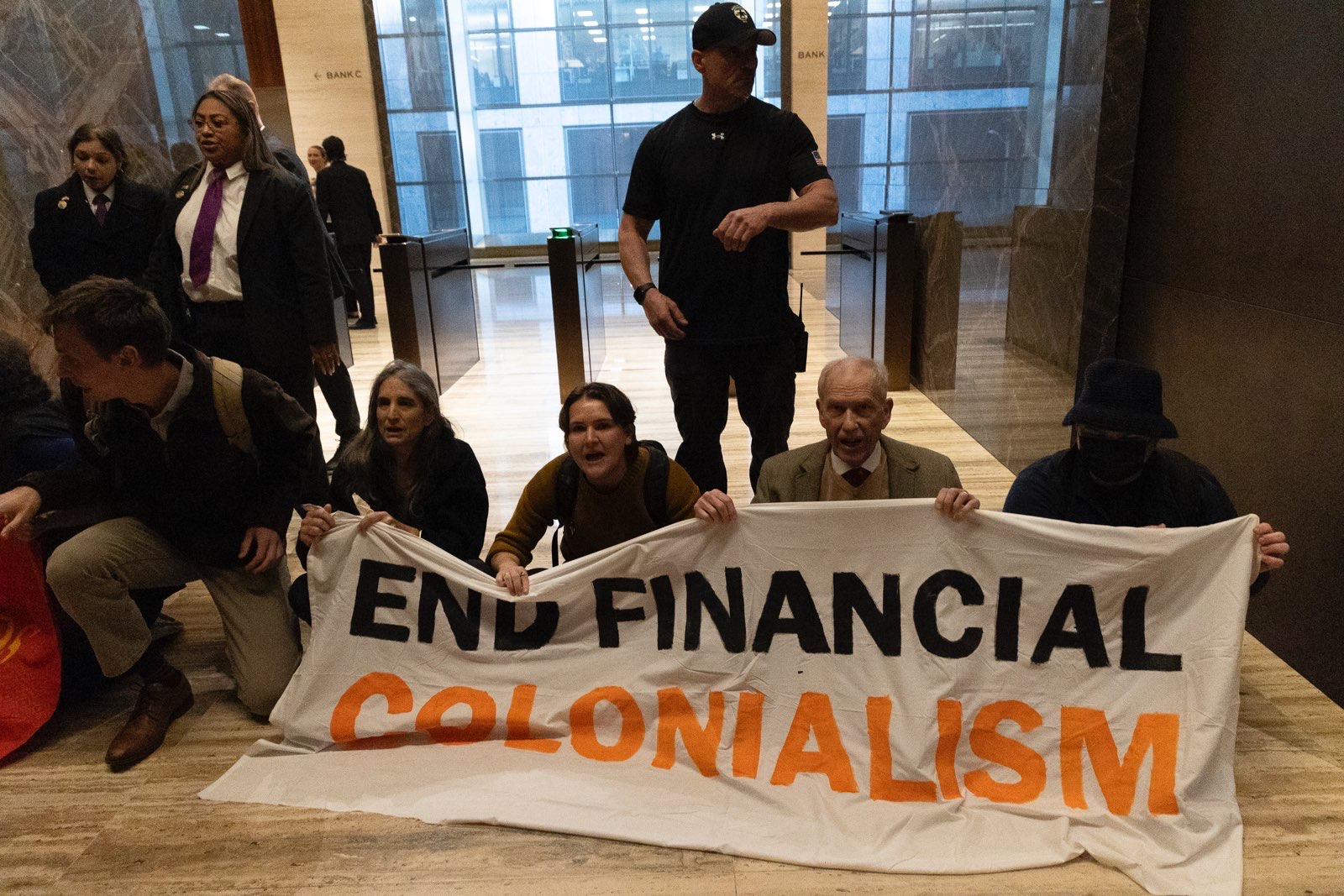
Declining support for the proposals signals that investors are falling in line with the Trump regime’s attacks on human rights and climate

Managed by Stand.earth & built by 89Up
